First, let’s clarify key industry knowledge behind qualified Rayon Crepe De Chine. Conventional silk crepe de chine relies on high-twist mulberry silk weft yarns with alternating S and Z twists to create delicate pebble textures on the fabric surface. Rayon Crepe De Chine inherits this classic weaving craft, yet replaces expensive silk fiber with regenerated cellulose extracted from sustainable wood pulp, namely viscose fiber. Premium 100% Viscose Crepe adopts strict twist control above 2800 twists per meter, matched with low-tension desizing and water washing post-treatment, which locks stable crepe texture without flattening or fading after repeated washing—an obvious gap between top-tier high-quality fabric and cheap low-twist rayon substitutes. Standard production specifications for mainstream apparel production range from 80 to 110 GSM with 145–150cm full width. Certified batches pass OEKO-TEX Standard 100 tests, removing harmful chemical residues and making the fabric safe for direct skin contact.
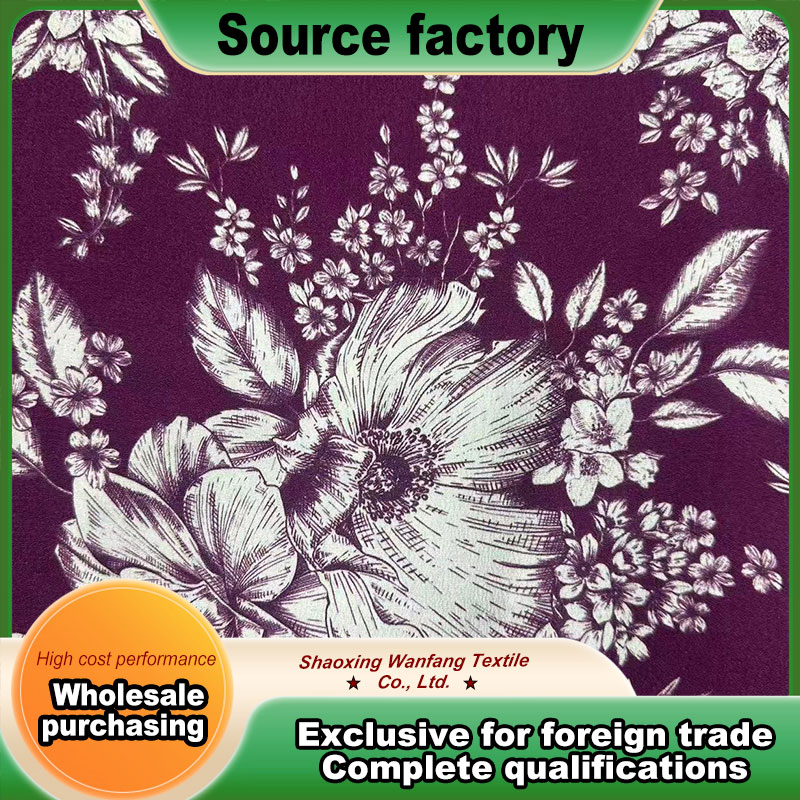
The biggest highlight of Rayon Crepe De Chine lies in its balanced wear performance that solves long-standing pain points of summer garment manufacturers. As plant-based regenerated fiber, 100% Viscose Crepe can absorb 14% moisture from human skin, nearly 1.5 times stronger moisture absorption than cotton, bringing continuous cool breathability to wearers in sweltering, humid regions. Different from static-prone polyester textiles, this high-quality fabric barely generates static cling. Its moderate draping weight supports designers to create flowy midi dresses, tailored office blouses and resort wide-leg pants, maintaining elegant outlines while avoiding excessive transparency. In terms of coloring, mature reactive dyeing technology is applied on Rayon Crepe De Chine to reach grade 4–5 color fastness to washing and friction, supporting complex floral, watercolor and abstract print designs favored by light luxury fashion labels.
A practical supply chain case from a French sustainable womenswear brand fully proves the commercial value of Rayon Crepe De Chine. Amour Vert, a Parisian brand focusing on ethical commuter and vacation clothing, abandoned blended polyester crepe in its 2026 spring collection and fully switched to certified 100% Viscose Crepe imported from professional Chinese viscose weaving factories. Before material upgrading, polyester crepe midi dresses brought 22% negative customer reviews, mainly complaining stuffy wearing experience and rigid unnatural drape. After adopting this high-quality fabric, consumer satisfaction jumped to 96%, and offline retail sales of crepe garments rose by 35%. The brand’s procurement director shared data at an international textile forum: Rayon Crepe De Chine cut raw material costs by 32% compared with imported silk crepe de chine, helping the brand maintain affordable mid-range pricing for eco-conscious mainstream consumers. Meanwhile, the lightweight property of 100% Viscose Crepe reduced single-garment shipping weight by 18%, cutting cross-border logistics carbon emissions and pushing forward the brand’s 2030 carbon neutrality target.
Textile analysts summarized three major trends boosting persistent global demand for Rayon Crepe De Chine until 2030. Firstly, stricter EU textile sustainability policies limit overuse of petroleum-based synthetic fabrics, pushing brands to shift toward biodegradable materials such as 100% Viscose Crepe. Secondly, DTC and fast fashion brands keep expanding lightweight summer product lines, requiring stable high-quality fabric that maintains uniform texture during mass bulk production. Thirdly, modern consumers pay more attention to skin-friendly apparel, actively rejecting harsh synthetic materials and preferring soft plant-origin Rayon Crepe De Chine suitable for sensitive skin.
Leading domestic viscose manufacturers including Yibin Grace Group and Zhejiang Fulida expanded exclusive Rayon Crepe De Chine production lines in 2026 to fulfill soaring export orders, updating closed-loop wastewater recycling systems to lift eco-friendly manufacturing capacity. Factory technical directors emphasized that precise control of yarn twisting and post-washing is the watershed between standard viscose crepe and premium high-quality fabric. Cutting corners on twist density or washing procedures will lead to uneven crepe grain, unstable drape and serious pilling after wearing, which will damage apparel brands’ long-term market reputation.
Industry market forecasts estimate that the Rayon Crepe De Chine market will sustain a 3.8% compound annual growth rate before 2035, with Southeast Asia and Latin America becoming emerging fast-growing consumption markets for garments made of 100% Viscose Crepe. For global apparel manufacturers and designers, choosing qualified, stably processed Rayon Crepe De Chine is a strategic decision to integrate luxurious appearance, comfortable wearing experience and sustainable supply chain development amid fierce fashion market competition.