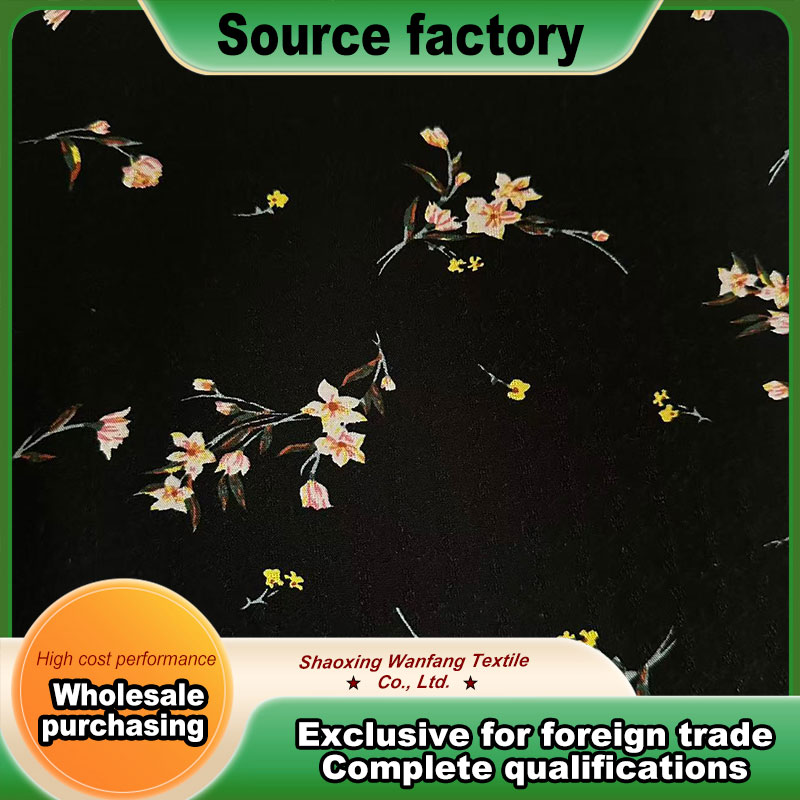
As global consumers increasingly pursue healthy, skin-friendly and sustainable textile products, natural fiber materials have gradually replaced chemical blended fabrics and become the mainstream of the fashion and home textile industries. Among numerous textile raw materials, 100% Cotton Plain Fabric stands out for its pure natural composition, stable weaving structure and wide applicability. It is recognized as the most versatile and cost-effective Cotton Fabric in the market. Adopting the classic one-up and one-down weaving structure, standard Plain Fabric features flat surface, uniform texture and excellent air permeability, while pure natural fiber characteristics make it the most trusted 100% Cotton material for clothing, home textiles and handmade production. For garment factories, handmade creators and small-batch tailor shops, high-quality Fabric for Sewing is the core foundation of finished product quality, and 100% cotton plain fabric has become the preferred material for mass production and personalized customization.
In the past, many textile purchasers and sewing practitioners tended to choose low-priced blended fabrics to control costs. However, inferior blended materials have many unavoidable defects. Chemical fiber blended fabrics are prone to static electricity, stuffy heat and skin irritation, which cannot meet the comfort requirements of close-fitting clothing. Low-quality imitation cotton materials are easy to pilling, fading and deforming after washing, seriously affecting the service life and appearance of finished products. In addition, many cheap fabrics on the market falsely label pure cotton, resulting in inconsistent density, uneven weaving and poor dyeing fastness. These unqualified materials often cause a large number of defective products in garment processing and handmade sewing, bringing economic losses to manufacturers and creators. With the continuous upgrading of market consumption concepts, people pay more attention to material safety and wearing experience. Pure natural 100% Cotton materials have become rigid demand in high-standard production, and reliable Cotton Fabric and standardized Plain Fabric have completely replaced inferior blended fabrics. As a high-quality base material widely recognized by the industry, professional Fabric for Sewing has become an essential raw material for modern textile processing.
The unique performance advantages of 100% Cotton Plain Fabric determine its irreplaceable position in the textile industry. Different from blended fabrics mixed with polyester and chemical fibers, this pure 100% Cotton material is made of natural cotton fibers without any chemical fiber doping. It has excellent moisture absorption and air permeability, which can automatically absorb sweat and moisture on the skin surface, keeping the human body dry and comfortable all year round. The classic Plain Fabric weaving structure features dense interweaving points, flat and neat cloth surface, stable texture and good wrinkle resistance, effectively avoiding the looseness and deformation of loose weave fabrics. As a high-quality general-purpose Cotton Fabric, it has strong dyeing and printing adaptability, supports solid color dyeing, digital printing, pattern printing and other processes, with bright color and high color fastness, not easy to fade after repeated washing. More importantly, pure cotton material is skin-friendly and non-irritating, free of peculiar smell and harmful chemical residues, meeting international environmental protection and textile safety standards, and is very suitable for making close-fitting clothes, baby textiles and medical sanitary fabrics.
In the field of processing and production, this fabric is the most practical Fabric for Sewing for all kinds of scenarios. Its moderate thickness, good toughness and neat cloth edge make it very friendly to manual sewing and machine sewing. It is not easy to slip, wrinkle or jump during cutting and stitching, greatly improving production efficiency and finished product yield. Garment factories often use 100% Cotton Plain Fabric to make casual shirts, summer T-shirts, casual pants and children’s clothing. Home textile processing enterprises take advantage of its flat and soft characteristics to produce bed sheets, pillowcases, tablecloths and curtains. Handmade lovers and tailor shops widely use this Plain Fabric for handmade bags, cloth art ornaments, simple clothing customization and patchwork creation. Whether it is large-scale industrial mass production or small-batch personalized sewing, pure 100% Cotton plain fabric can perfectly adapt to various processing needs.
Global textile market data shows that the demand for pure natural cotton fabrics continues to grow steadily. With the rise of green consumption and healthy wearing trends, the market share of chemical blended fabrics is gradually shrinking, while all kinds of high-quality Cotton Fabric represented by 100% Cotton Plain Fabric maintain strong market vitality. Buyers no longer only pursue low unit prices, but pay more attention to fabric purity, weaving density, washing fastness and sewing stability. Standardized Plain Fabric with pure cotton composition has become the mainstream choice for textile procurement. As a versatile and easy-to-process Fabric for Sewing, it covers almost all basic textile processing fields and has extremely high market adaptability.
Industry analysts predict that with the continuous improvement of global textile environmental protection standards and consumer health awareness, the market demand for 100% Cotton materials will continue to expand. In the future, textile manufacturers will further optimize the weaving process and finishing technology of 100% Cotton Plain Fabric, improve the softness, wrinkle resistance and washing durability of Cotton Fabric, enrich the specifications and colors of Plain Fabric, and provide more high-quality and diverse Fabric for Sewing solutions for global garment processing, home textile production and handmade creative industries, helping the sustainable development of the green textile industry.